The vertical machining center is one of the most widely used CNC machine tools in modern manufacturing. It features a vertical spindle structure and can efficiently perform various operations such as milling, drilling, tapping, boring, reaming, slotting, and complex contour machining, making it widely used for precision machining of various metal parts.
Compared to traditional milling machines, vertical machining centers haveadvantages such as high machining accuracy, high production efficiency, good repeat positioning accuracy, and a high degree of automation.Multiple processes can be completed in a single setup, which not only reduces manual operations but also effectively improves machining efficiency and product consistency.
Today, vertical machining centers are widely used inautomotive manufacturing, mold processing, aerospace, machinery manufacturing, medical devices, and general metalworking industries,making them an indispensable piece of equipment in modern precision manufacturing.
This article will comprehensively introduce the working principle, main components, application fields, advantages, and how to choose the right VMC equipment for your needs.
A vertical machining center (VMC) is a type ofVertical spindle structureCNC machining equipment. During the machining process, the spindle moves up and down along the Z-axis, and the worktable moves along the X-axis and Y-axis, achieving high-precision machining on multiple surfaces of the workpiece.
Compared with ordinary CNC milling machines, the biggest advantage of vertical machining centers is their ability tocomplete multiple machining processes in a single setupincluding:
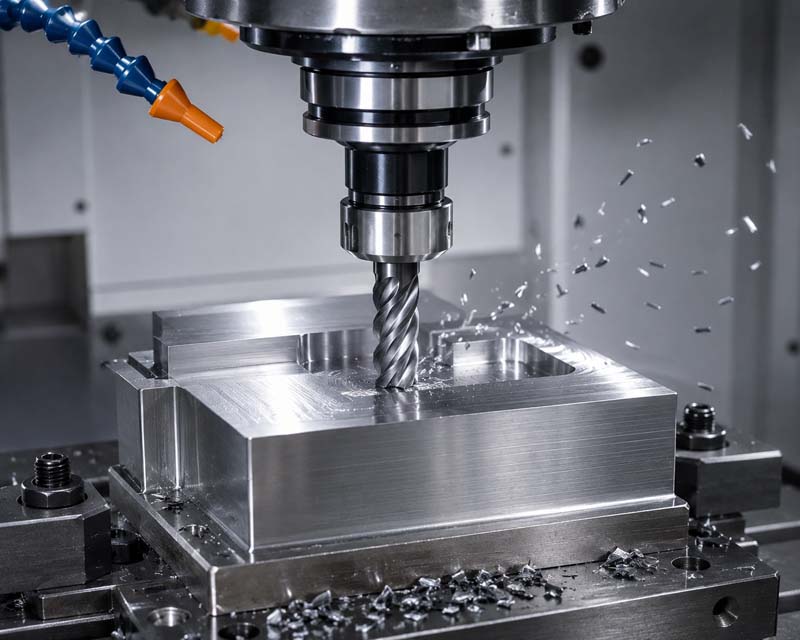
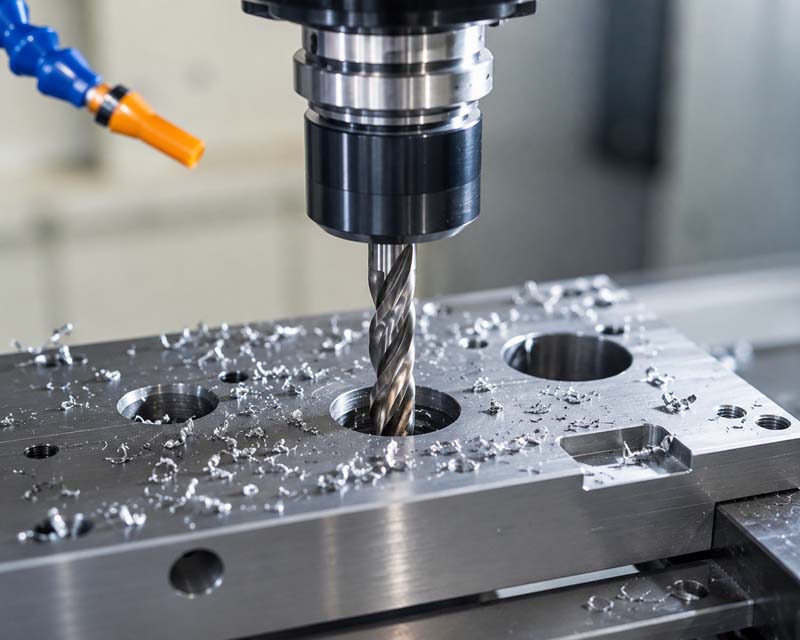
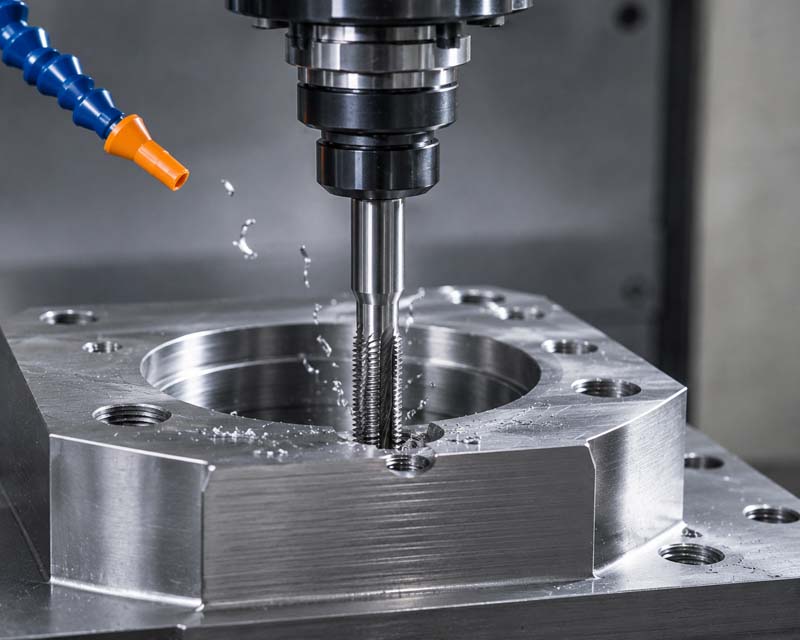
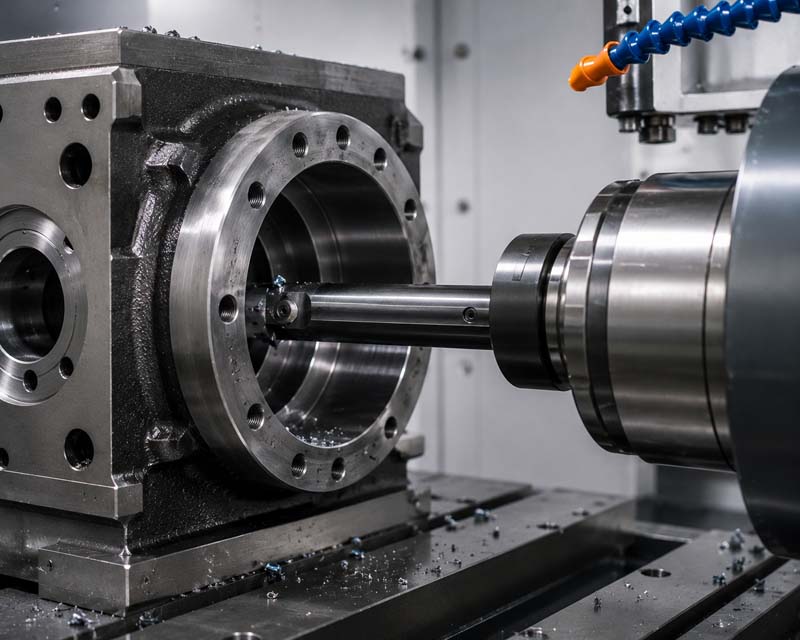
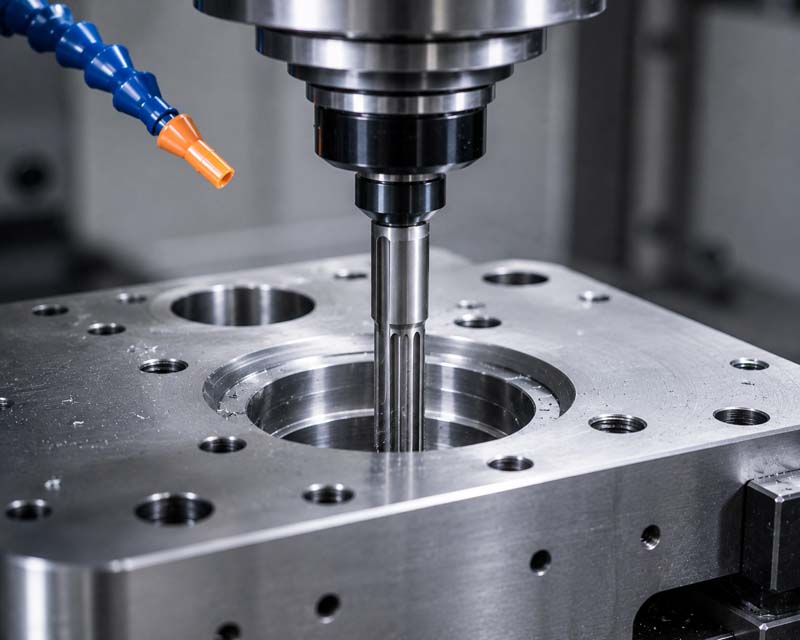
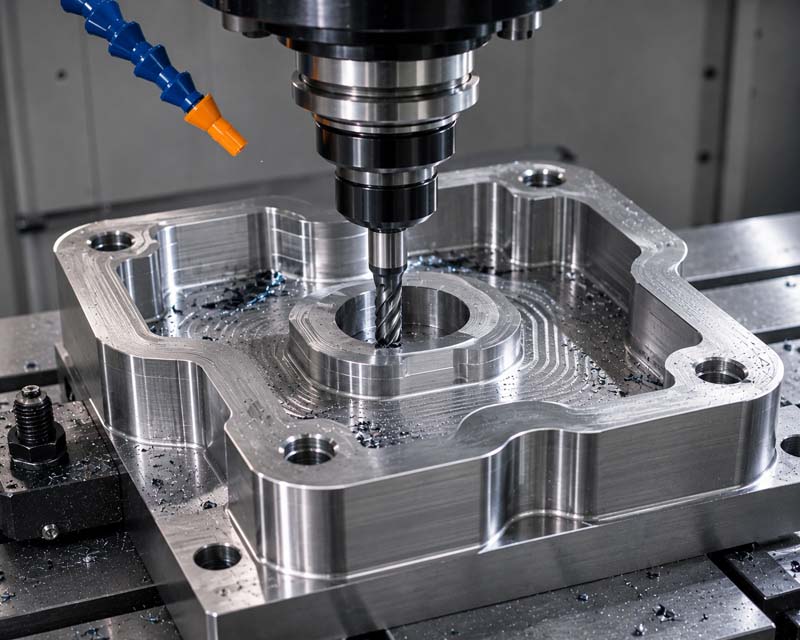
Since all machining actions are controlled by the CNC system, it can maintain stable machining accuracy, good surface quality, and high production efficiency, making it suitable for prototype machining, small batch production, and medium batch manufacturing.
The vertical machining center automatically completes the entire machining process through CNC programs.
First, engineers complete the part design using CAD software, then generate the machining program using CAM software, and finally import the program into the CNC system, where the machine tool automatically completes the machining according to the set path.
The standard machining process is as follows:
During the machining process, the **Automatic Tool Changer (ATC)** automatically switches between different tools according to the program, enabling continuous processing of various operations such as milling, drilling, and tapping, greatly improving production efficiency and reducing manual intervention.
The spindle is the core component of the vertical machining center; its speed, power, and rigidity directly affect machining efficiency, accuracy, and surface finish.
The CNC system is the brain of the entire machine tool, responsible for controlling the movement of each axis and the machining process. Common brands includeFANUC, Siemens, Mitsubishi, and GSK (Guangzhou CNC).
The automatic tool changer can automatically switch between different tools according to the machining program, reducing downtime and improving production efficiency.
The worktable is used to mount workpieces and fixtures; its size and load capacity determine the maximum size and weight of workpieces that the machine tool can process.
High-precision linear guides and ball screws ensure smooth machine movement, accurate positioning, and extend the overall machine lifespan.
The cooling system effectively reduces cutting temperature, prolonging tool life; the chip removal system promptly clears chips, keeps the machining area clean, and enhances continuous machining capability.
Vertical machining centers, with their high precision, high efficiency, and cost-effectiveness, have become the preferred equipment for many manufacturing enterprises.
For most manufacturing enterprises, vertical machining centers can significantly improve production efficiency and reduce overall manufacturing costs while ensuring machining quality.
Widely used for processing mold base plates, mold cavities, inserts, and various high-precision mold parts.
Suitable for processing engine parts, transmission housings, brackets, brake system components, and aluminum alloy structural parts.
Capable of machining lightweight parts such as aluminum alloys and titanium alloys, with high requirements for dimensional accuracy and surface quality.
Used for machining flanges, frames, housings, connecting plates, and various mechanical components.
Suitable for processing various metal materials including steel, stainless steel, cast iron, aluminum, copper, and brass.
| Comparison Items | Vertical machining center | Horizontal machining center |
|---|---|---|
| Spindle orientation | Vertical | Horizontal |
| Equipment cost | Lower | Higher |
| Footprint | Smaller | Larger |
| Operation difficulty | Simple | More complex |
| Chip removal capability | Good | Better |
| Heavy cutting capability | Strong | Stronger |
| Mold processing | Very suitable | Quite suitable |
| Applicable parts | Small and medium-sized parts | Large and complex parts |
For the vast majority of machining enterprises, vertical machining centers offer a higher cost-performance ratio; horizontal machining centers are more suitable for heavy cutting, multi-face machining, and large batch production.
Select the appropriate travel and table size based on the maximum workpiece dimensions. FULU CNC offers various models including VMC650, VMC850, VMC855, VMC1160, VMC1275, and VMC1580.
For machining steel parts, a standard spindle can be chosen; for machining aluminum alloys and high-speed cutting, it is recommended to select a high-speed spindle of 10000rpm or 12000rpm.
A high-rigidity bed enhances machining stability, especially suitable for mold machining and heavy cutting conditions.
For complex parts, it is recommended to choose tool magazines with more tool positions to reduce tool changes and improve production efficiency.
Brands like FANUC, Siemens, Mitsubishi, etc., offer stable and reliable systems that can be configured according to customer requirements.
It is recommended to choose machine tool manufacturers with comprehensive technical support, spare parts supply, and after-sales service capabilities.
FULU CNC is a professional CNC machine tool manufacturer specializing in the research, development, and manufacturing of vertical machining centers, CNC lathes, milling machines, and other metal processing equipment, with products sold to many countries and regions worldwide.
Our advantages include:
Whether you need a VMC850, VMC1160, or a large VMC1580 machining center, we can provide you with a professional equipment selection plan based on your workpiece size, processing materials, and production requirements.
Mainly used for milling, drilling, tapping, boring, slotting, and complex surface machining, widely applied in automotive, aerospace, mold manufacturing, and mechanical processing industries.
A vertical machining center is an upgraded version of a CNC milling machine, equipped with an automatic tool changer, fully enclosed protection, and higher automation level, making it more suitable for industrial mass production.
They can process carbon steel, stainless steel, cast iron, aluminum alloy, copper, brass, titanium alloy, and some engineering plastics.
Highly suitable. Vertical machining centers are widely used for machining mold base plates, mold cavities, inserts, and various high-precision mold parts.
The equipment price depends on factors such as machine model specifications, spindle configuration, CNC system, tool magazine capacity, and optional features. Please contact FULU CNC for a personalized quote.
FULU CNC specializes in the research and manufacturing of high-performance vertical machining centers, with products featuringhigh precision, high efficiency, high stability, and long service lifewidely used in mold manufacturing, automotive parts, aerospace, medical devices, and precision metal machining industries.
Please provide the following information, and our engineers will recommend the most suitable model for you:
Contact FULU CNC nowto get a customized equipment solution, delivery schedule, and factory direct sales quotation.